Mortice locks vs nightlatches: securing a timber front door
The difference between mortice deadlocks, sashlocks and nightlatches, which your timber door needs, what insurers ask for, and how to secure older cottage doors.
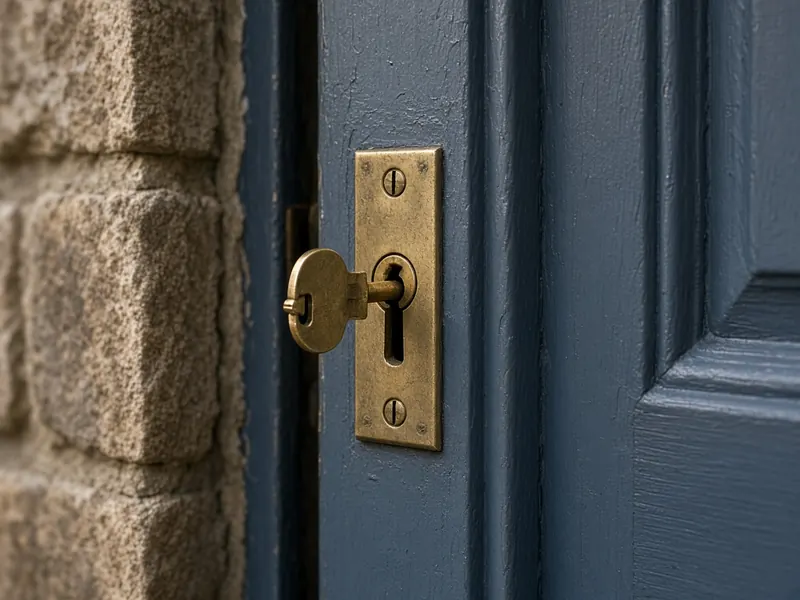
Many homes across Moray, from Victorian villas in Forres and Elgin to fishermen’s cottages in Buckie and Findochty, still have traditional timber front and back doors. Securing them properly means understanding two main types of lock: the mortice lock and the nightlatch. Most well-secured timber doors use both.
The nightlatch (“Yale-type” lock)
A nightlatch is the lock most people picture when they think of a front door. It’s mounted on the inside surface of the door, with a cylinder through the door and a latch that clicks shut automatically when the door closes.
Pros:
- convenient: the door latches itself when you pull it shut
- quick to open from inside with the handle or knob
Cons:
- a basic nightlatch only holds the door on a spring latch, which can sometimes be slipped or forced
- the inside knob can be reached through a broken glass panel or letterbox on some doors
- many insurers don’t accept a basic nightlatch on its own
Better options include deadlocking nightlatches, where the latch can be deadlocked with the key so it can’t be pushed back, and British Standard nightlatches, which are tested to BS 3621 and have a key-locking internal handle.
The mortice lock
A mortice lock is set into a pocket (a mortice) cut into the edge of the door, so the lock body is hidden inside the timber. You only see the keyholes and the faceplate on the door edge.
There are two main types:
- Mortice deadlock. Just a bolt, operated by a key. Used alongside a nightlatch on front doors.
- Mortice sashlock. A bolt plus a latch operated by a handle. Common on back doors, where it’s the only lock.
Five-lever mortice locks are the usual standard for external doors, and a BS 3621 five-lever lock is what many insurance policies ask for. But not every five-lever lock meets BS 3621, so check for the marking. Read BS 3621 explained.
Why use both?
On a front door, the classic secure combination is:
- a nightlatch for everyday convenience, when you’re at home or popping out
- a BS 3621 mortice deadlock that you lock whenever the house is empty and at night
The two locks spread the force across two points on the door, and the deadlock can’t be slipped like a latch.
Back doors
Back doors are often less secure than front doors, yet they’re a common way in for burglars because they’re out of sight. A BS 3621 sashlock, plus bolts top and bottom on the inside, makes a big difference. If the door has glass panels, think about whether a key left in the lock could be reached. Keep it out of the lock but nearby, for escape in a fire.
Is my door suitable?
Mortice locks need a door thick and sound enough for the pocket to be cut without weakening it. Many older doors in Moray are:
- thinner than modern external doors
- panelled, with thin sections where a lock can’t go
- already weakened by earlier locks, filled holes and repairs
A locksmith will look at the door and frame before recommending a lock. If a BS 3621 mortice lock isn’t suitable, options include a British Standard nightlatch, rack bolts, surface bolts, a London bar or Birmingham bar to reinforce the frame, or a new door.
Don’t forget the frame
A strong lock is only as good as what it locks into. Burglars often kick or force the frame rather than the lock. Check that:
- the keep (the box or plate on the frame that the bolt goes into) is fixed with long screws into solid timber or masonry
- the frame isn’t rotten or split
- hinges are securely fixed, with hinge bolts fitted on outward-opening doors
Old rim locks and character doors
Many older cottages still have Victorian-style rim locks: big boxes on the inside of the door with large keys. They have real character, but most are no match for modern burglary techniques. You can often keep the rim lock for its looks and add a modern mortice deadlock or British Standard nightlatch for security.
Signs your timber door locks need attention
- The key is stiff or needs jiggling in the mortice lock.
- The nightlatch doesn’t click shut unless you slam the door.
- The bolt doesn’t fully enter the keep, or you have to lift the door to lock it.
- Screws on the keep or lock are loose, or the timber around them is split.
All of these are usually quick fixes if caught early.
Fire safety
Make sure everyone in the house can get out quickly. If your doors are deadlocked with a key from inside at night, keep keys in a consistent place near the door, out of reach from outside. Alternatively, choose locks with a thumb-turn inside (BS 8621).
Key points
Most timber front doors are best secured with a nightlatch plus a BS 3621 mortice deadlock, and back doors with a BS 3621 sashlock plus bolts. Older or thinner doors need careful lock choice and attention to the frame. In Moray, Moray Locksmith supplies and fits locks for timber doors, and can tell you what your door can take.
Frequently asked questions
Is a Yale lock enough for a front door?
A basic nightlatch on its own is usually not enough for insurers. Add a BS 3621 mortice deadlock, or upgrade to a British Standard nightlatch.
What is the difference between a deadlock and a sashlock?
A deadlock only has a key-operated bolt. A sashlock has a bolt and a handle-operated latch.
Can old cottage doors take a mortice lock?
Often, but not always. It depends on the door’s thickness and condition. A locksmith can check.
This guide is general information for homes in Scotland. It is not legal or insurance advice. Always check your own policy, tenancy agreement and official guidance.