BS 3621 explained: what “insurance-approved” locks really mean
What BS 3621 means, how to check if your lock meets it, and how it relates to BS 8621, BS 10621, PAS 3621 and multipoint locks on uPVC doors. Plain-English guide.
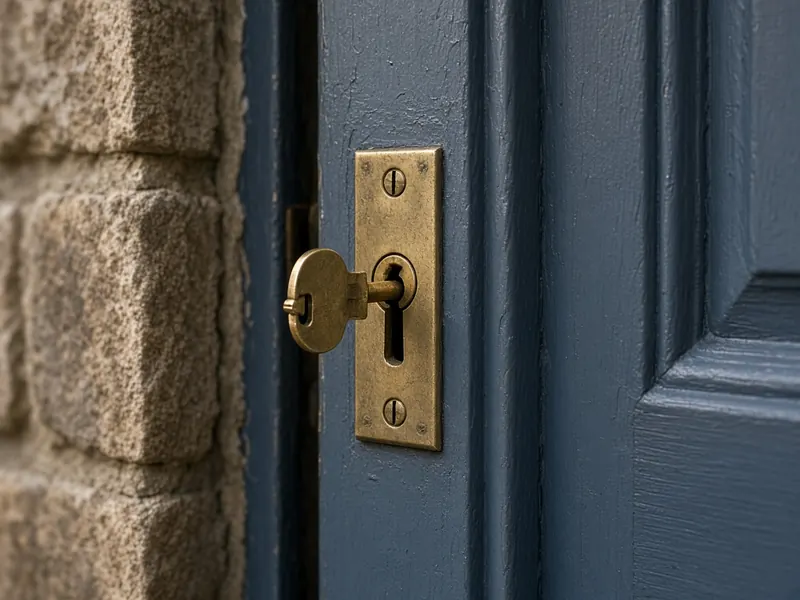
If you’ve read your home insurance policy closely, you may have seen a line saying that final exit doors must be fitted with locks “conforming to BS 3621” or “a five-lever mortice deadlock to BS 3621”. Many people only find this wording after a burglary, when it’s too late. Here’s what it means, how to check your locks and what to do if they don’t comply.
What is BS 3621?
BS 3621 is a British Standard for thief-resistant locks. A lock that meets it has been tested to resist a range of attacks, including drilling, picking, sawing and forcing, for set periods. It also has a minimum number of key differs (different key combinations), so the chance of another key opening your lock is very small.
Locks certified to BS 3621 are usually marked with the Kitemark symbol and the standard number on the faceplate, the metal strip you can see on the edge of the door when it’s open.
BS 3621 locks are key-locking on both sides. You need a key to lock and unlock from inside and outside. That stops a burglar who has broken a glass panel reaching in to open the door, and it means they can’t carry large items out through the front door if they got in another way.
The related standards
The family of standards has grown over the years:
- BS 3621. Key needed on both sides. The classic five-lever mortice deadlock on a timber door.
- BS 8621. Key outside, thumb-turn inside, so you can get out quickly in a fire without hunting for a key. It suits homes where escape matters, such as flats, but you need to be confident a thumb-turn can’t be reached through glass or a letterbox.
- BS 10621. A dual-mode lock that can be switched to key-only from outside when the house is empty, giving you a thumb-turn for escape when you’re in.
- PAS 3621 and PAS 8621. Equivalent standards for multipoint locks, the long locking strips on uPVC and composite doors.
Most insurers accept these as equivalents, but always check your own policy’s wording.
How to check your lock
- Open the door and look at the faceplate on the edge.
- Look for the Kitemark and “BS 3621” (or BS 8621 / BS 10621) stamped on it.
- On a mortice lock, count the levers if it says them: “5 lever” is typical, but five levers alone doesn’t mean BS 3621. It must carry the standard marking.
- On uPVC doors, check the cylinder too. The weak point is often the cylinder rather than the multipoint lock. Look for TS 007 stars or SS312 Diamond. Read anti-snap euro cylinders.
If you can’t find a marking, or it has worn away, a locksmith can identify the lock for you.
What insurers usually ask for
Wording varies, but typical requirements are:
- Final exit doors (the last door you lock when leaving) with a BS 3621 mortice deadlock or equivalent multipoint lock
- Other external doors secured with bolts top and bottom, or with BS 3621 locks
- Accessible windows fitted with key-operated locks
- Locks to be used whenever the property is empty or at night
That last point catches people out. Having the right lock doesn’t help if the door was only latched.
Can every door take a BS 3621 lock?
No. BS 3621 mortice locks are substantial, and the door needs to be thick and solid enough to take the lock body without being weakened. Many older timber doors in Moray’s cottages and terraces are thinner than modern doors, or have been chopped about by several generations of locks.
If a mortice lock isn’t suitable, alternatives include:
- a British Standard nightlatch (rim-mounted, with key-locking features)
- mortice rack bolts or surface bolts top and bottom
- hinge bolts on outward-opening doors
- a door reinforcement kit or new door if the existing one is beyond saving
Read mortice locks vs nightlatches for more.
uPVC and composite doors
On uPVC and composite doors, insurers generally accept a multipoint lock with a suitably rated euro cylinder. Many people assume their uPVC door is fine because it has lots of locking points. In reality, a weak cylinder can be snapped in seconds, bypassing all those hooks and bolts. Upgrading to a TS 007 3-star or Sold Secure SS312 Diamond cylinder is often the single best-value improvement you can make.
Fire safety and escape
Security mustn’t come at the expense of getting out in a fire. If your front door can only be unlocked with a key from inside, keep the key somewhere sensible near the door, out of reach from the letterbox and windows. Or consider a BS 8621 or BS 10621 lock with a thumb-turn. Scottish Fire and Rescue Service advice is to keep escape routes clear and know where your keys are.
Key points
BS 3621 is a tested standard for thief-resistant locks, and many insurers require it, or an equivalent, on final exit doors. Check the faceplate for the Kitemark and standard number. If your door can’t take a BS 3621 lock, there are other British Standard options. In Moray, Moray Locksmith supplies and fits BS 3621 insurance-approved locks, and can check what your doors need.
Frequently asked questions
Is a 5-lever lock the same as BS 3621?
Not necessarily. Many BS 3621 mortice locks are five-lever, but a lock only meets the standard if it’s marked with it, usually alongside a Kitemark.
Do uPVC doors need BS 3621 locks?
uPVC doors use multipoint locks, which have their own equivalent standards, and a euro cylinder. Insurers generally look for a suitably rated cylinder such as TS 007 3-star or SS312 Diamond. Check your policy.
Will my claim be refused without BS 3621 locks?
It depends on your insurer and policy wording. Some reduce or refuse claims if the required locks weren’t fitted or used. Read your policy and ask your insurer if unsure.
What is the difference between BS 3621 and BS 8621?
BS 3621 needs a key on both sides. BS 8621 has a thumb-turn inside, so you can get out without a key in an emergency.
This guide is general information for homes in Scotland. It is not legal or insurance advice. Always check your own policy, tenancy agreement and official guidance.