uPVC door won’t lock? Common multipoint lock problems and fixes
Why uPVC doors stop locking: dropped doors, failing gearboxes, floppy handles and worn cylinders. What you can check yourself and when to call a locksmith.
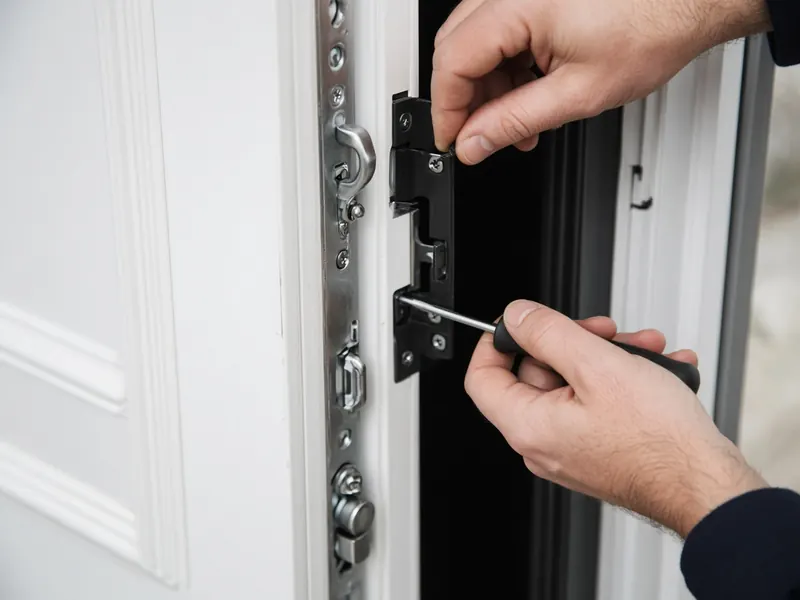
A uPVC or composite door that won’t lock is one of the most common reasons people call a locksmith in Moray. The good news is that most problems are fixable, often without replacing the whole mechanism, as long as they’re caught early. This guide explains how the lock works, what goes wrong and what you can safely check yourself.
How a uPVC door locks
Most uPVC and composite doors use a multipoint lock: a long metal strip running down the edge of the door, with several locking points such as hooks, rollers, bolts or deadbolts. In the middle is a gearbox, operated by the handle and the euro cylinder.
The usual sequence is:
- Close the door. The latch holds it shut.
- Lift the handle. This throws the hooks, rollers and bolts into the keeps on the frame.
- Turn the key. This locks the mechanism in place.
If any part of that chain is out of line or worn, you’ll feel it as stiffness.
Problem 1: The door has dropped
uPVC expands and contracts with temperature, and doors settle on their hinges over time. When the door drops even a few millimetres, the locking points no longer line up with the keeps. You notice it as:
- having to lift the handle harder than usual
- needing to push or pull the door to get the key to turn
- scuff marks on the keeps or frame
Fix: hinge and keep adjustment, a quick job for a locksmith. It’s worth doing promptly, because forcing a misaligned door is the main cause of gearbox failure. Read more on why doors stick in winter.
Problem 2: The handle won’t lift, or lifts but doesn’t lock
If the handle won’t lift at all, or lifts but the locking points don’t engage, the gearbox may have failed. Gearboxes contain small springs and cogs that wear out or break under strain.
Fix: the gearbox, or sometimes the whole multipoint strip, needs replacing. There are hundreds of types, so the locksmith will identify yours and fit a matching replacement. If the door is stuck locked, it can usually be opened without serious damage.
Problem 3: The handle is floppy
A handle that droops or doesn’t spring back is usually a broken spring in the handle, or occasionally in the gearbox.
Fix: a new handle set is often all you need. It’s also a good moment to upgrade to security handles.
Problem 4: The key won’t turn
If the handle lifts fine but the key won’t turn, or turns only partly, the problem may be:
- misalignment, with the bolts not quite reaching their keeps
- a worn or dirty cylinder
- the wrong key, or a badly copied one
Fix: align the door, or replace the cylinder. If you’re replacing it, upgrade to an anti-snap cylinder. See anti-snap euro cylinders.
Problem 5: The key turns all the way round
If the key spins freely without locking or unlocking anything, the cam at the back of the cylinder may have broken, or the cylinder may have been attacked. Check for damage, and if you suspect tampering, report it to Police Scotland on 101.
Problem 6: The door won’t latch shut
If the door won’t stay closed without being locked, the latch may be worn, the keep may need adjusting, or the door may have swollen. In a wet Moray winter, timber-cored composite doors can swell slightly.
What you can safely do yourself
- Lubricate the locking points and the latch with a light lubricant made for locks or multipoint mechanisms.
- Check the keeps for loose screws.
- Look at the gap around the door. An uneven gap suggests it has dropped.
- Stop forcing it. If it needs real force, call a locksmith before something breaks.
Avoid adjusting hinges yourself unless you know the hinge type. Some adjust easily with an Allen key, but others are easily damaged.
What not to do
- Don’t use a lever or tools on the handle.
- Don’t keep using a lock that’s getting worse. A failed gearbox in the locked position means the door is stuck locked.
- Don’t spray thick grease into the cylinder.
Repair, upgrade or replace the door?
A failing lock is rarely a reason to replace the whole door. Gearboxes, multipoint strips, handles, keeps, hinges and cylinders are all replaceable parts, and a door that is otherwise sound can be returned to full working order for a fraction of the cost of a new one. A new door is only worth considering if the frame is damaged, the door is badly bowed or warped, or it was poorly made to begin with. Even then, get a locksmith’s opinion first. Many “broken” doors simply need adjusting.
Windows have the same problems
uPVC windows use similar espagnolette mechanisms, operated by the window handle. If a window handle is stiff or won’t lock, the gearing inside may be failing. Handles and window gearing can be replaced.
Key points
Most uPVC door lock problems start with misalignment and get worse with force. Spot the early signs, such as a stiff handle or needing to push the door, and get the door aligned and serviced. In Moray, Moray Locksmith services, repairs and upgrades uPVC door and window locking systems.
Frequently asked questions
Is it the gearbox or the cylinder?
As a rule of thumb, if the handle won’t lift or lock the points, it’s the gearbox or alignment. If the handle works but the key won’t turn, it’s the cylinder or alignment.
Can a uPVC door be repaired or does it need replacing?
Almost always repaired. Gearboxes, multipoint strips, handles, cylinders and keeps are all replaceable parts.
My door is stuck locked. Can you open it?
Yes. A locksmith can usually open a door with a failed mechanism and replace the faulty part in the same visit.
How often should I service a uPVC door?
A light lubrication of the locking points once or twice a year helps, especially before winter. Get it adjusted if it starts to stiffen.
This guide is general information for homes in Scotland. It is not legal or insurance advice. Always check your own policy, tenancy agreement and official guidance.