How to spot a rogue locksmith (and find a genuine local one)
Locksmithing isn’t regulated in the UK. The warning signs of rogue and call-centre locksmiths, the questions to ask, and how to check MLA approval before you call.
Most locksmiths are honest tradespeople. But because you usually need one urgently, often late at night and locked out, it’s easy to be taken advantage of. Knowing the warning signs before you need help is the best protection.
Locksmithing isn’t regulated by law
In the UK, anyone can call themselves a locksmith. There’s no legal licence, no compulsory training and no mandatory criminal record check. That’s why trade bodies and accreditations matter. The Master Locksmiths Association (MLA) is the largest trade association for locksmiths in the UK. Its approved companies are vetted, inspected and qualified, and you can check a company’s status on the MLA website.
Warning sign 1: The “local” number that isn’t local
Search for “locksmith near me” and you’ll see adverts that look local, with a town name and a local-looking number. Some are national call centres or lead-generation sites. They take your call, quote a low price and pass the job to whichever subcontractor is free, who may be an hour or more away and may charge a different price on arrival.
How to check:
- Ask: *“Are you the locksmith who will come out, and where are you based?”*
- Look for a real name, a real address and a business history in the area.
- Check reviews that mention specific local places and people.
- Be wary of websites with lots of town pages but no named locksmith.
Warning sign 2: A price that is vague or too low
Rogue operators often quote something like “from £39” on the phone, then add call-out fees, “specialist lock” fees, VAT and parts on arrival. When you’re locked out in the cold, it’s hard to say no.
Ask before they set off:
- What is the total price for opening my door, including call-out and VAT?
- What might make it more expensive?
- Do you take card payments?
A genuine locksmith will give you a clear answer and agree the price before starting.
Warning sign 3: Drilling straight away
Most domestic lockouts can be opened without damaging the lock. A locksmith who goes straight for the drill, without trying non-destructive methods first, may be inexperienced or may be looking to sell you a new lock. If they say the lock must be drilled, ask why.
Warning sign 4: No questions about who you are
A genuine locksmith will ask for proof of ID and proof that you live at the property before completing entry. Someone who will open any door without checking isn’t protecting you or your neighbours.
Warning sign 5: Pressure, cash only, no paperwork
- Pressure to buy expensive “high-security” upgrades on the spot.
- Cash only, or insistence on a bank transfer to a personal account.
- No invoice or receipt, or no business name on it.
- An unmarked vehicle and no identification.
Warning sign 6: Scare stories about your locks
Be cautious of anyone who tells you every lock in the house is dangerous and must be replaced today. Upgrades can be well worth doing, and anti-snap cylinders are a good example, but a genuine locksmith will explain why, show you the problem, give you a price and let you decide. Good advice includes telling you when a lock is fine as it is.
What a good locksmith visit looks like
- You speak to the locksmith, or a small local team, when you call.
- You get a realistic arrival time and a clear price.
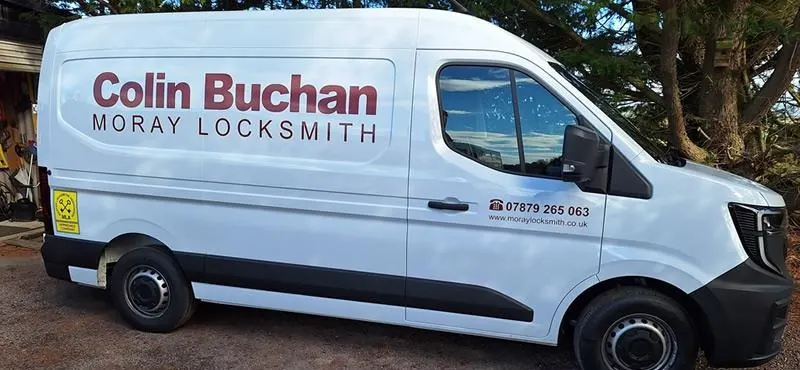
- They arrive in a marked vehicle and can show identification.
- They try non-destructive entry first and explain what they are doing.
- They check your ID and right to enter.
- Any extra work is discussed and agreed before it starts.
- You get a proper invoice or receipt with the business name and address.
How to find a genuine locksmith now, before you need one
The best time to find a locksmith is before you’re locked out:
- Search for locksmiths in your town and check that they have a named person, an address and a history.
- Check MLA approval on the MLA website, at locksmiths.co.uk.
- Read reviews on more than one platform.
- Save the number in your phone.
In Moray, Moray Locksmith is run by Colin Buchan, a Qualified Master Locksmith based in Forres. The business is an MLA Approved Company (licence no. 003915), and Colin holds a current Disclosure Scotland certificate. You speak to Colin directly, prices are agreed before work starts, and there are no hidden costs. You can read what customers say.
If you think you’ve been ripped off
- Don’t pay for work you didn’t agree to, if you can safely refuse. If you feel threatened, pay and complain afterwards.
- Get a receipt with the business name and address.
- Contact Advice Direct Scotland (consumeradvice.scot), which provides Scotland’s consumer advice service and passes reports to Trading Standards.
- If the locksmith is an MLA member, complain to the MLA.
- If you paid by card, ask your card provider about a chargeback.
Key points
Because locksmithing is unregulated, choose carefully. Look for a real local business, a clear price agreed up front, non-destructive entry first, ID checks and MLA approval. Save a trusted local number before you need it. In Moray, that’s Colin on 07879 265063.
Frequently asked questions
Do locksmiths need a licence in the UK?
No. There is no legal licensing scheme for locksmiths in the UK, which is why accreditation such as MLA approval matters.
How can I check if a locksmith is MLA approved?
Use the Find a Locksmith search on the Master Locksmiths Association website and check the company name and licence number.
Should a locksmith ask for ID?
Yes. A genuine locksmith should ask for proof of identity and residence before completing entry.
Where do I report a rogue trader in Scotland?
Contact Advice Direct Scotland, Scotland’s consumer advice service, which works with Trading Standards. If you were threatened, contact Police Scotland.
This guide is general information for homes in Scotland. It is not legal or insurance advice. Always check your own policy, tenancy agreement and official guidance.