Locked out of your house in Moray? What to do, step by step
Locked out of your house or flat in Moray? A calm, step-by-step guide: what to check first, who to call, what it costs and how to avoid it happening again.
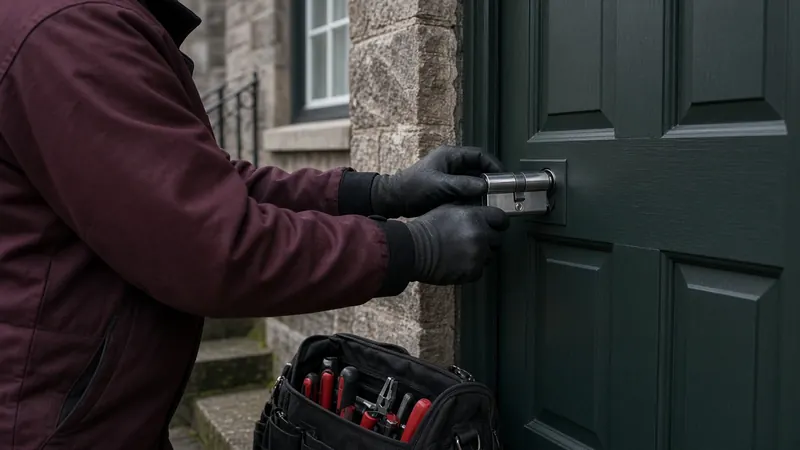
Being locked out is stressful, especially on a dark, wet Moray evening with the shopping at your feet or a child who needs the toilet. The good news is that it’s one of the most common problems a locksmith deals with, and in most cases you can be back inside quickly without damaging your door. This guide covers what to do, in the right order.
Step 1: Make sure everyone is safe
Before anything else, think about who and what is on the other side of the door.
- If a child, vulnerable adult or pet is inside and at risk, for example a toddler alone, a pan on the hob, or someone unwell, call 999 straight away. The emergency services will deal with access.
- If you are out in the cold, find somewhere warm to wait: a neighbour’s house, your car, or a nearby café.
- If you think you’ve been locked out because someone has tampered with your locks, or you see signs of a break-in, don’t go in. Call Police Scotland on 999 if it’s happening now, or 101 if not.
Step 2: Check every way in, calmly
It sounds obvious, but in a panic people miss things.
- Try the back door, side door and garage door. Is anything unlocked?
- On a uPVC door, try the handle properly. A door that has only been pushed shut and not locked by lifting the handle and turning the key will open with the handle.
- Check whether a window was left open, but don’t climb in through upstairs windows or anything you need to stand on bins to reach. Falls cause far worse injuries than a locksmith’s bill.
Step 3: Think about who has a spare key
Before calling anyone out, think about spare keys:
- a family member, partner or neighbour
- your landlord or letting agent, who will normally hold a key for rented property
- a key safe, if you have one
- your workplace, car or bag
If you rent, your landlord or agent is usually the first call. Many letting agents in Moray can get a key to you during office hours. Outside office hours, or if they can’t help, a locksmith is the next step.
Step 4: Call a local, accredited locksmith
If there’s no spare key, call a locksmith. A few minutes choosing the right one can save you a lot of money and hassle:
- Call someone local. Many “local” adverts are national call centres that pass your job to whoever is available and add their own fee. A local locksmith answers their own phone.
- Ask for a price before they set off, and ask what could change it.
- Check accreditation. Locksmithing isn’t regulated by law in the UK, so anyone can call themselves a locksmith. The Master Locksmiths Association (MLA) vets and inspects its approved companies.
Read more in our guide on how to spot a rogue locksmith.
In Moray, Colin at Moray Locksmith treats lockouts as a priority. Call 07879 265063.
Step 5: Have your proof ready
A genuine locksmith will ask you to prove who you are and that you live at the property before completing entry. Have in mind what you can show:
- photo ID such as a driving licence (often in a car or bag)
- something with your name and address on it, such as a bank card, utility bill, council tax letter or tenancy agreement
If your documents are inside, that’s normal. The locksmith will usually let you in and then check your paperwork before leaving. Being asked is a good sign, not an insult.
What happens when the locksmith arrives
A good locksmith starts with non-destructive entry. Depending on the lock, that might mean:
- opening a nightlatch (Yale-type lock) with specialist tools
- manipulating or picking a mortice lock
- opening a uPVC door using techniques that work on the multipoint mechanism or cylinder
Drilling or snapping a lock should be a last resort. If a lock does have to be destroyed, the locksmith should replace it there and then, so you aren’t left with a door that won’t lock.
Locked out because the lock has failed
Sometimes you haven’t lost your keys at all. The key turns but nothing happens, or the handle won’t lift. On uPVC doors this is usually a failed gearbox in the multipoint lock. It’s fixable, but it needs a locksmith with the right parts. Read uPVC door won’t lock? for the warning signs.
If the key has snapped in the lock, keep both pieces. They help the locksmith extract the broken part and cut a new key. See key snapped in the lock.
Lost keys rather than locked in?
If your keys are lost or stolen rather than locked inside, think about whether you should change the locks. If the keys had your address on them, were in a bag with ID, or were stolen, the answer is almost certainly yes. Read lost your house keys?.
How to stop it happening again
- Leave a spare key with someone you trust who lives nearby.
- Consider a key safe, but choose a properly rated one and fit it somewhere discreet. See are key safes secure?.
- Get stiff locks fixed early. Many lockouts start with a lock that has been “a bit sticky” for months.
- Keep keys in the same place every time you come in.
- Avoid labelling keys with your name or address.
Key points
Stay safe, check every door, think about spare keys, and if you need a locksmith, choose a local, accredited one who quotes up front and asks for proof of residence. Most lockouts end with you back inside, door intact, within a short visit.
Frequently asked questions
Will the police or fire service let me in?
Only in a genuine emergency, such as a child or vulnerable person at risk inside, or a fire risk like a pan left on the hob. In those cases, call 999. For an ordinary lockout, call a locksmith.
Will a locksmith have to break my lock?
Usually not. Most domestic lockouts are opened non-destructively. If a lock has to be destroyed, it should be replaced on the spot.
Does home insurance cover lockouts?
Some policies, or home emergency add-ons, include lockout cover. Check your documents before calling, as you may need to use the insurer’s helpline.
What if I rent my home?
Contact your landlord or letting agent first, as they normally hold a spare key. A locksmith will ask for proof of tenancy before completing entry.
This guide is general information for homes in Scotland. It is not legal or insurance advice. Always check your own policy, tenancy agreement and official guidance.