Access control for small businesses: mechanical and battery keypad locks
A plain-English guide to access control for small businesses: mechanical push-button locks, battery keypad and fob locks, wired systems, and how to choose.
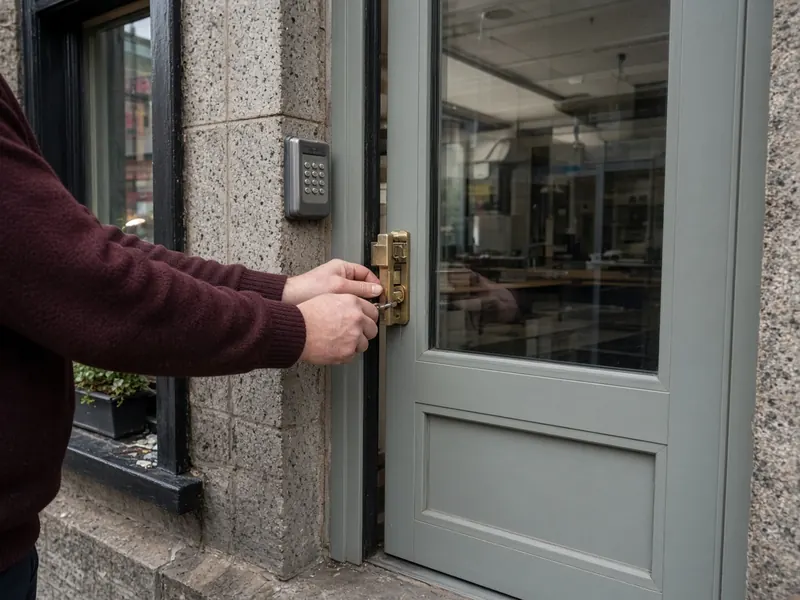
Keys work, but they have limits. Staff leave without handing them back, copies get made, and changing locks every time someone moves on gets expensive. Access control lets you decide who can get in, and change that quickly, without new keys. For small businesses there are simple, affordable options that don’t need a big wired system.
The three main types
1. Mechanical push-button (digital) locks
A mechanical code lock has a keypad of buttons and no electronics at all. Enter the right code and the latch releases.
Good for: staff rooms, stores, kitchens, internal doors, outbuildings and places where power isn’t available.
Pros:
- no batteries, no wiring, no software
- robust and long-lasting
- code can be changed, usually by a simple procedure
Cons:
- one code for everyone, so you can’t tell who opened the door
- codes get shared, so they need changing regularly
- usually a latch rather than a high-security lock, so best paired with a proper lock for out-of-hours security
2. Battery-powered keypad and fob locks
Battery-powered locks fit like a normal lock but add a keypad, card or fob reader. Depending on the model, they can offer:
- multiple user codes or fobs, so each person has their own
- timed access, such as cleaners only between 6am and 8am
- audit trails showing who opened the door and when
- remote or app management on some models
Good for: shop and office entrances, staff doors, shared entrances, holiday lets and small premises where wiring would be costly or disruptive.
Pros: no mains wiring, individual users, quick to add or remove people.
Cons: batteries need checking and replacing, and features vary widely between products.
3. Wired (mains) access control
Larger systems use mains-powered readers, electric locks and a central controller. They’re powerful, with many doors, integration with alarms and fire systems, and central management, but more expensive and disruptive to install. Many small businesses don’t need one.
Moray Locksmith supplies and fits mechanical and battery-powered access control systems. See access control.
Questions to ask before choosing
- How many people need access, and how often do they change?
- Do you need to know who opened the door, and when?
- Do some people need access only at certain times?
- Is the door external or internal? External doors need a high-security lock as well as access control.
- Is there power at the door?
- What happens in a fire? People must always be able to get out quickly.
- What’s your budget for installation and running costs?
Fire safety and escape
Access control must never trap people inside. Escape doors generally need to open from inside without a code, key or fob. That might mean a handle or push bar on the inside. If you’re unsure, check with your fire risk assessment and, where relevant, building standards.
Combining keys and access control
Many small businesses use a combination:
- access control on the main staff entrance, so codes and fobs can be cancelled
- a high-security deadlock for out-of-hours security, opened only by keyholders
- master-keyed cylinders on internal doors and stores
See master key and keyed-alike systems.
Code hygiene
Whichever system you choose, keep codes and credentials under control:
- Change codes when staff leave, and regularly in any case.
- Avoid obvious codes, such as 1234, the street number or the year.
- Clean or check keypads, because worn buttons can reveal the code.
- Keep a record of who has which fob or code.
- Cancel lost fobs immediately.
Insurance and security standards
Your insurer may have requirements for the locks on final exit doors and for out-of-hours security. Access control devices don’t always replace the need for a properly rated lock. Check your policy, and keep a deadlock for when the premises are empty.
How it might look in practice
These are illustrations of common set-ups, not specific customers:
- A town-centre shop might fit a battery keypad on the staff entrance, so the manager can add and remove staff codes, and keep the front door on a high-security deadlock.
- A visitor centre might use a mechanical push-button lock on a store room so staff don’t need to carry keys.
- A boatyard or yard might use keyed-alike padlocks on containers and a fob lock on the office.
Getting it right
A locksmith will look at your doors, how they’re used and who needs access, then recommend the simplest system that does the job. Over-complicated systems are a headache to run, and under-specified ones get bypassed.
Key points
For most small businesses, a mechanical push-button lock or a battery keypad or fob lock gives flexible, affordable access control without wiring. Pair it with a proper lock for out-of-hours security, plan for fire escape, and keep codes under control. Talk to Moray Locksmith about your premises.
Frequently asked questions
Do keypad locks replace a normal lock?
Not always. For out-of-hours security on external doors, a properly rated deadlock is often kept as well.
Can I see who opened the door?
Only with systems that support individual users and audit trails. Mechanical push-button locks don’t.
Do battery locks need much maintenance?
Mainly battery changes. Most warn you when batteries are low.
This guide is general information for homes in Scotland. It is not legal or insurance advice. Always check your own policy, tenancy agreement and official guidance.