How to secure patio doors and French doors
Sliding patio doors and French doors are common targets. Anti-lift protection, multipoint locks, cylinders, bolts, hinge security and simple upgrades explained.
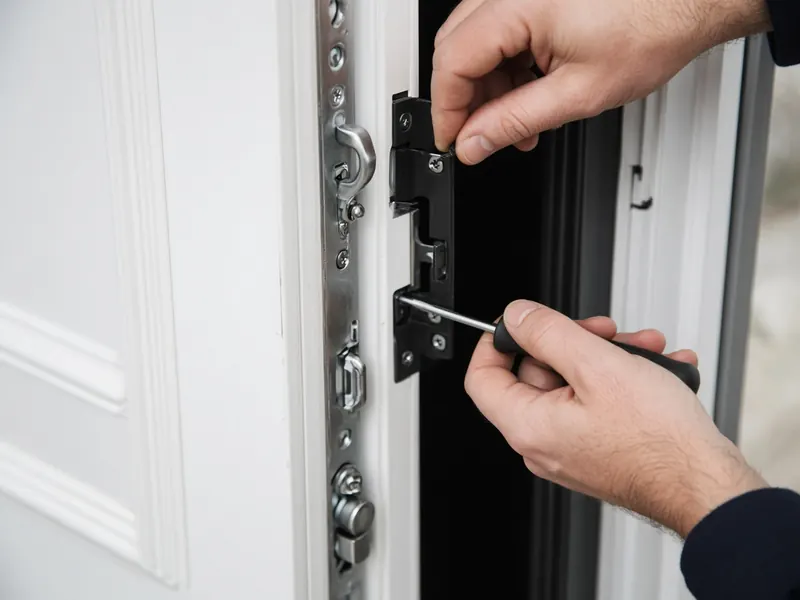
Patio doors and French doors bring light and garden views into the home. But they’re often at the back of the house, out of sight of the street, with a lot of glass and older locking hardware. That makes them a common target. The good news is that most can be made much more secure without replacing the whole door.
Sliding patio doors
The lift-out risk
Older sliding patio doors can sometimes be lifted off their tracks from outside, especially if the sliding panel is on the outside track. Look for:
- anti-lift blocks or devices fitted in the top track, which stop the door being lifted
- an anti-lift screw through the frame at the top
Locks
Many sliding doors have a multipoint lock with hooks that engage into the frame, operated by a handle and euro cylinder. Upgrades include:
- an anti-snap euro cylinder. See anti-snap euro cylinders
- additional patio door locks that lock the sliding panel to the fixed panel or frame
- a security bar or a length of timber in the track when you’re home at night, as a simple extra
Glazing
Check the glass is laminated or toughened, as modern doors should be, and that glazing beads are internally fitted so they can’t be removed from outside.
French doors
French doors are a pair of doors that open together, usually outward. They have their own weak points.
The slave door
One door, the slave or secondary door, is usually held closed by bolts at the top and bottom, while the master door carries the main lock. If those bolts are weak or not engaged, the whole pair can be pushed open.
- Make sure the slave door has good-quality shoot bolts into the head and threshold, and that they’re always engaged when locked.
- On uPVC French doors, the slave door often has its own multipoint mechanism operated by a lever. Check it engages fully.
- On timber French doors, fit mortice rack bolts or flush bolts top and bottom.
Outward-opening hinges
Outward-opening doors have their hinges on the outside. If hinge pins can be removed, the door can be lifted out even when locked. Fit hinge bolts (dog bolts), which lock the hinge side of the door into the frame.
Locks
- uPVC and composite French doors usually have a multipoint lock and a euro cylinder, so upgrade the cylinder to anti-snap.
- Timber French doors may have a mortice sashlock. Ideally use a BS 3621 lock rated for the door. Read mortice locks vs nightlatches.
Bi-fold doors
Bi-folds are increasingly common in extensions. Their security depends heavily on quality. Check for multipoint locking on the traffic door, secure shoot bolts on all panels, anti-lift features and anti-snap cylinders.
Don’t forget alignment
As with any uPVC door, a dropped patio or French door won’t lock properly, and forcing it breaks the mechanism. If the handle is stiff or the bolts don’t engage, get it adjusted. Read uPVC door won’t lock?.
Upgrade or replace?
If your patio or French doors are old, draughty and insecure, replacement may be worth considering. But for most doors that are otherwise sound, adding anti-lift protection, an anti-snap cylinder, better bolts and hinge bolts is far cheaper and makes a real difference. New doors in Scotland are expected to meet modern security standards. PAS 24 is the widely used test standard for enhanced security doors and windows, so look for it if you’re replacing them.
How burglars attack patio and French doors
Knowing the methods helps you focus on the right fixes:
- Lifting sliding doors off their track
- Snapping the euro cylinder
- Forcing the slave door of a French pair at the top or bottom corner
- Removing hinge pins on outward-opening doors
- Prising out glazing beads on older doors with external beads
Simple habits
- Lock the door properly whenever you go out, even into the garden for a while. Lift the handle, turn the key and remove it.
- Keep keys out of the lock, but near the door for escape in a fire.
- Don’t leave valuables in view of glass doors.
- Use curtains or blinds at night.
- Fit security lighting in the garden.
Fire escape
Patio and French doors are often an important escape route. Make sure everyone in the house knows where the key is kept, or consider a thumb-turn cylinder where the door glass is laminated and the thumb-turn can’t easily be reached.
Insurance
Many insurers have specific requirements for patio and French doors, such as key-operated locks, or multipoint locks with rated cylinders. Check your policy wording.
Key points
Patio and French doors are usually secured best by anti-lift protection, a multipoint lock with an anti-snap cylinder, strong bolts on the slave door and hinge bolts for outward-opening doors. If yours feel flimsy or are hard to lock, Moray Locksmith can assess and upgrade them.
Frequently asked questions
Can sliding patio doors be lifted out?
Some older ones can. Anti-lift blocks or screws in the top track prevent it.
What is the weak point on French doors?
Often the slave door’s top and bottom bolts, and exposed hinges on outward-opening doors.
Do I need new doors to improve security?
Usually not. Cylinders, bolts, anti-lift devices and hinge bolts can be added to existing doors.
This guide is general information for homes in Scotland. It is not legal or insurance advice. Always check your own policy, tenancy agreement and official guidance.